Surface tension

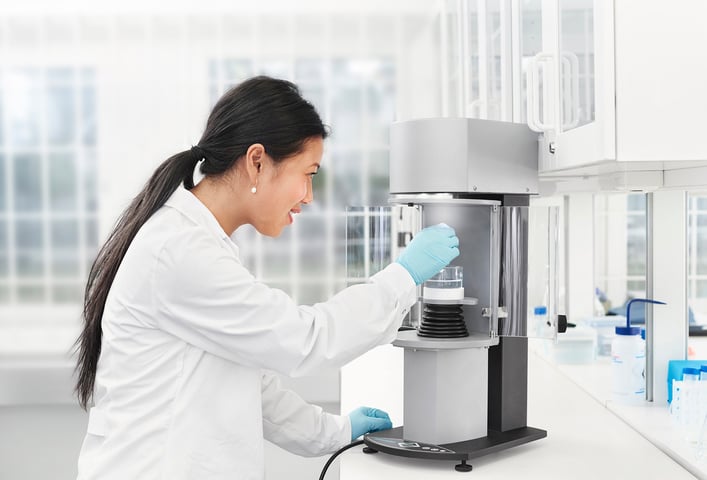
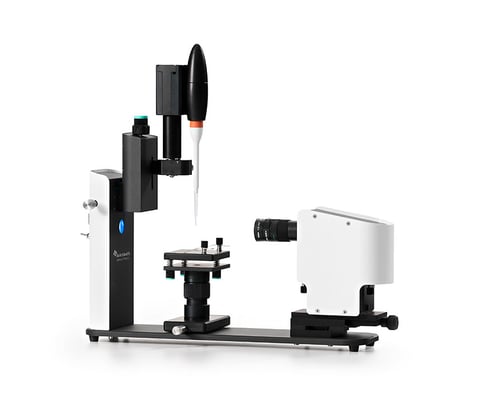
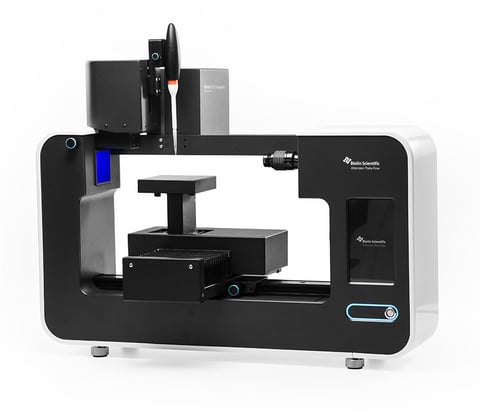
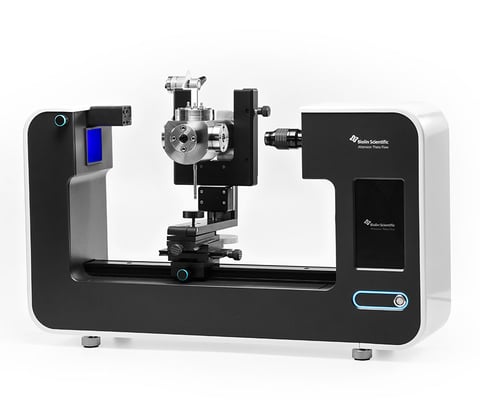
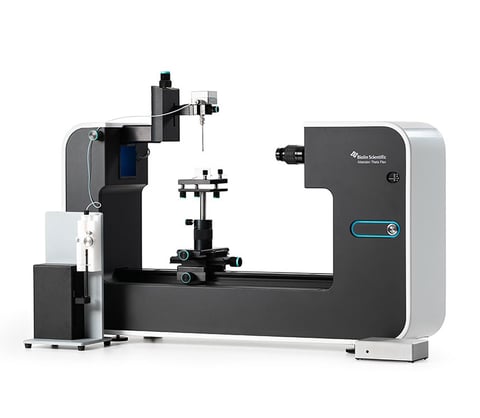
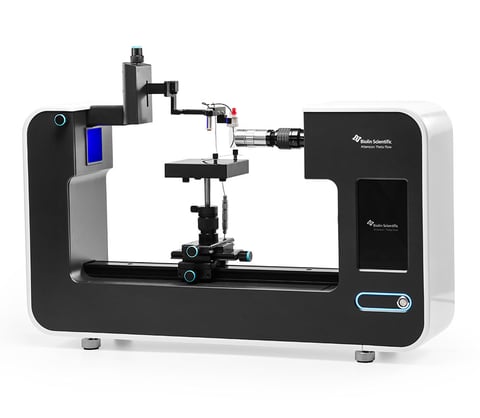
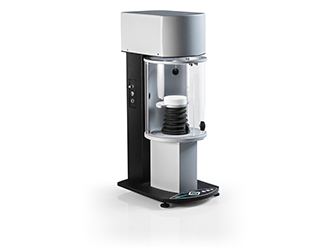
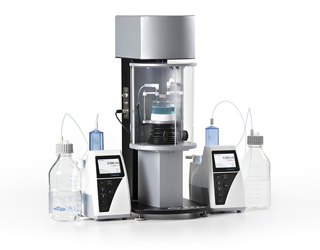
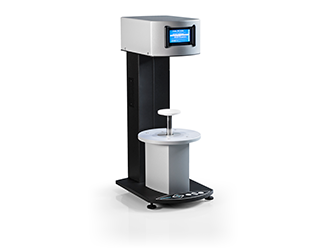
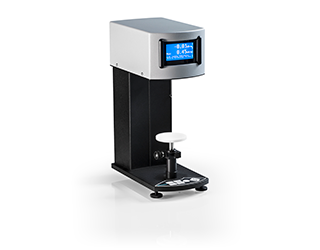
The instrument of choice to measure surface tension is Sigma 700/701. Other Sigma force tensiometers and Theta optical tensiometers can also be used, depending on your goals and experimental constraints. Dynamic surface tension can be measured using BPA-800P bubble tensiometer.


What is surface tension?


Surface tension is a measurement of the cohesive energy present at an interface. The molecules of a liquid attract each other. The interactions of a molecule in the bulk of a liquid are balanced by an equal attractive force in all directions. Molecules on the surface of a liquid experience an imbalance of forces as indicated below.


How is surface tension measured?


As mentioned above, surface tension can be measure using force tensiometers or optical tensiomters (also known as contact angle meter or goniometer). Bubble tensiometry can also be used but will not be described below.


Force tensiometry


The measurement of surface and interfacial tension as performed by a Sigma force tensiometer is based on force measurements of the interaction of a probe with the surface of interface of two fluids. With any of the techniques described herein you may perform interfacial tension measurements just like surface tension measurements by insuring that the bulk of the probe is submersed in the light phase prior to beginning the experiment.


In these experiments a probe is hung on a balance and brought into contact with the liquid interface tested. The forces experienced by the balance as the probe interacts with the surface of the liquid can be used to calculate surface tension. The forces present in this situation depend on the following factors; size and shape of the probe, contact angle of the liquid/solid interaction and surface tension of the liquid. The size and shape of the probe are easily controlled. The contact angle is controlled to be zero (complete wetting). This is achieved by using probes with high energy surfaces. Attension probes are made of a platinum/iridium alloy which insures complete wetting and easy and reliable cleaning.


The mathematical interpretation of the force measurements depends on the shape of the probe used. Two types of probes are commonly used, the Du Noüy ring and the Wilhelmy plate. A metal rod can also be used to limit the liquid sample volume.


> Du Noüy ring


This method utilizes the interaction of a platinum ring with the surface being tested. The ring is submerged below the interface and subsequently raised upwards. As the ring moves upwards it raises a meniscus of the liquid. Eventually this meniscus tears from the ring and returns to its original position. Prior to this event, the volume, and thus the force exerted, of the meniscus passes through a maximum value and begins to diminish prior to the actually tearing event. The process is shown in the diagram below:


 duNouyRingCycle&Graph


1 - The ring is above the surface and the force is zeroed.
2 - The ring hits the surface and there is a slight positive force due to the adhesive force between ring and surface.
3 - The ring must be pushed through the surface (due to the surface tension) which causes a small negative force.
4 - The ring breaks through the surface and a small positive force is measured due to the supporting wires of the ring.
5 - When lifted through the surface the measured force starts to increase.
6 - The force keeps increasing until
7 - The maximum force is reached
8 - After the maximum there is a small decrease of in the force until the lamella breaks.


A video of surface tension measurement by the Du Noüy ring method can be seen in the video below


The calculation of surface or interfacial tension by this technique is based on the measurement of this maximum force. The depth of immersion of the ring and the level to which it is raised when it experiences the maximum pull are irrelevant to this technique. The original calculations based on the ring technique were based on theories which apply to rings of infinite diameter and do not consider an additional volume of liquid which is raised due to the proximity of one side of the ring to the other. This additional liquid lifted is diagrammed below as the darker turquoise portion:


DuNouyCorrectionCalculation


Mathematical corrections which compensate for this extra liquid have been produced. The Attension software utilizes the corrections suggested by Huh and Mason in reference cited below.


> Wilhelmy Plate


This method utilizes the interaction of a platinum plate with the surface being tested. The calculations for this technique are based on the geometry of a fully wetted plate in contact with, but not submerged in, the heavy phase. In this method the position of the probe relative to the surface is significant. As the surface is brought into contact with the probe your Sigma will notice this event by the change in forces it experiences. It will register the height at which this occurs as the ‘zero depth of immersion’. The plate will then be wetted to a set depth to insure that there is indeed complete wetting of the plate (zero contact angle) . When the plate is later returned to the zero depth of immersion, the force it registers can be used to calculate surface tension.


 WilhelmyPlateImmersion


> Platinum rod


If you wish to measure surface tension of a liquid of which you have limited quantities you may consider using a platinum rod as your probe. With either of the probes discussed above the liquid required for testing may be more than you have available. The amount necessary to test with a certain probe must be sufficient to fill a vessel which accommodates the probe, to a depth which insures complete wetting of the probe is possible. With a given volume you can fill to a greater depth if the diameter of the vessel is smaller. Limitations to this strategy occur when the edges of the probe approach the edges of the measuring vessel. In that case the forces on the balance may be affected by the meniscus of the liquid as it contacts the vessel.


To avoid these problems you can choose to employ a metal rod as your probe. This allows you to use very much smaller volumes of your test liquids. In any technique the absolute accuracy of the measurement of the geometry of your probe affects the accuracy of your results. Measurement of the geometry of a fine rod is likely to be less accurate, on a % basis, than the measurement of your larger probes. Therefore this approach should only be used in situations where the volume of liquid available is an issue. The calculations for this technique are based on the same principles as the Wilhelmy plate method.


Optical tensiometry


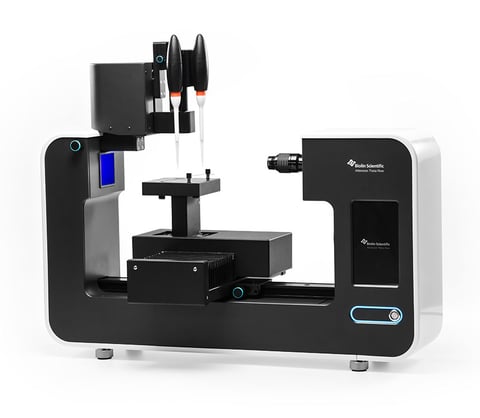
Surface and interfacial tension can be measured with a Theta optical tensiometer by a so-called pendant drop shape analysis (or reverse pendant drop). The shape of a drop of liquid hanging from a syringe tip is determined from the balance of forces which include the surface tension of that liquid. The surface or interfacial tension at the liquid interface can be related to the drop shape through the following equation:


γ = Δρ . g . R02 / β


where γ = surface tension
         Δρ = difference in density between fluids at interface
         g = gravitational constant
         R0 = radius of drop curvature at apex
         β = shape factor


β, the shape factor can be defined through the Young-Laplace equation expressed as 3 dimensionless first order equations as shown in the figure below. 


 PendantDropYoungLaplace


Modern computational methods using iterative approximations allow solution of the Young-Laplace equation for β to be performed. Thus for any pendant drop where the densities of the two fluids in contact are known, the surface tension may be measured based upon the Young-Laplace equation. This approach represents a significant improvement, in both ease and accuracy, from traditional methods. This method has advantages in that it is able to use very small volumes of liquid, measure very low interfacial tensions and can measure molten materials easily. High quality surface and interfacial measurements can be made with this method using an Attension Theta or Theta Lite optical tensiometer.


A video of surface tension measurement using Theta optical tensiometer is available below:


Dynamic surface tension


It is often necessary to distinguish between the static surface tension and dynamic surface tension. Dynamic processes such as speed of surfactant adsorption to the gas/liquid interface of for example surfactants, can be studied with the maximum bubble tensiometer BPA-800P. The Theta and Sigma series tensiometers provide the means for measuring semi-dynamic and equilibrium surface tensions.

Sigma 700/701

Sigma 700 and 701 are state-of-the-art tensiometers, providing highly accurate measurements of surface and interfacial tension, dynamic contact angles, surface free e…

More
Sigma 702/702ET

Sigma 702 and Sigma 702ET are standalone tensiometers offering high resolution and precision for surface and interfacial tension measurements, as well as non-automati…

More
Sigma 703D

Sigma 703D is a simple standalone and robust digital tensiometer for accurate measurement of surface and interfacial tension of liquids by DuNouy ring or Wilhelmy pla…

More
Theta

Theta is an advanced and versatile optical tensiometer for highly accurate measurements of static and dynamic contact angle, surface free energy, surface and interfac…

More
Theta Lite

Theta Lite is a compact and accurate optical tensiometer for simple contact angle and surface free energy measurements. It can also measure surface and interfacial te…

More
BPA-800P

BPA-800P bubble tensiometer is a standalone instrument for highly accurate and reproducible dynamic surface tension measurements of water-based solutions.

More